
OnlyFans pages that charge nothing to follow still generate revenue, and understanding how they do it changes the way you spend. The zero-dollar entry point is not charity; it is a deliberate revenue architecture built on pay-per-view messages, tips, and conversion pressure. This article reverse-engineers that economics so you can predict where your money will actually go. BestOnlyFans refreshes its rankings every month.
When the base subscription is $0, every dollar a creator earns comes from a different decision: unlocking a locked message, sending a tip, or requesting custom content. Recognizing the mechanics gives you leverage over your own budget.

The Platform Economics Behind Zero-Dollar Entry
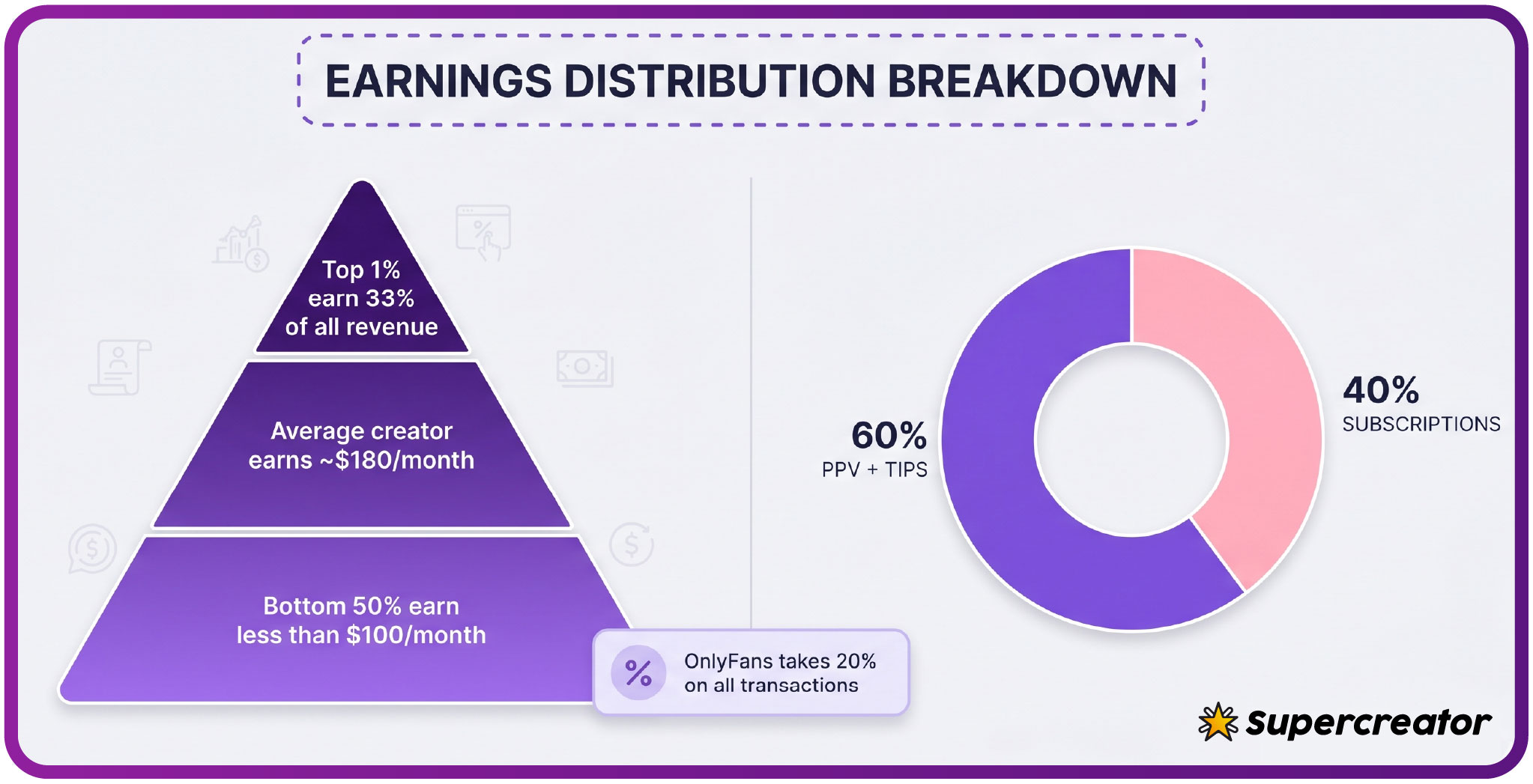
OnlyFans takes a 20% platform fee on everything that moves through the site. The creator keeps the remaining 80%. That split applies to subscriptions, pay-per-view unlocks, tips, and custom content payments alike, which means a free page is not a loss leader for the platform. It is simply a different collection point.
On a paid page, the base subscription range runs from $4.99 at the minimum to $49.99 at the maximum. Most paid pages cluster between $4.99 and $15, with averages landing around $5 to $10. Free pages set the price to $0 and move the entire revenue burden onto PPV messages and tips. Promotional first months can legally sit below $4.99, such as a $3 first month, but a base price may never go below that floor.
This matters for subscribers because a cheap introductory month usually signals a page that plans to recover revenue through other means later. There is also a card verification hold of $0.10 when you add a payment method. It is refunded within days and is not a charge. It exists to confirm the card is valid before any unlock or tip can be processed.

Because the creator keeps 80% of every transaction, the incentive on a free page is volume of small decisions rather than one recurring charge. Ten of those in a month outperforms many paid subscriptions, and it happens without a recurring billing relationship.
PPV Message Architecture: Primary Revenue Engine
Locked messages, usually delivered through direct messages, are the core monetization tool on free pages. The subscriber sees a preview or a description, then pays to unlock the full content. Unlock prices can reach up to $50, and the pricing is tiered by perceived exclusivity.

Paid chat commonly runs $3 to $5 per message on pages that charge for conversation. That is separate from PPV unlocks and separate from tips. A subscriber who chats regularly and unlocks occasionally can easily spend more in a week than a mid-tier paid subscription would cost in a month.
The psychological design is straightforward. The preview creates curiosity, the lock creates a decision point, and the price anchor makes a $10 unlock feel modest next to a $50 one. Urgency messaging compresses the decision window further.
- Introductory teasers priced at $3-$5 to establish the unlock habit
- Standard content unlocks at $10-$15, the most common tier
- Premium exclusive material at $20-$30 for committed followers
- High-ticket custom or rare content at $40-$50
- Time-limited urgency offers that expire to force a faster decision
Understanding these tiers helps you recognize when a message is priced for habit-building rather than for content you actually want. The first unlock on a page is usually the cheapest, because the goal is to break the barrier once.
Tip: before unlocking anything above $15, wait 24 hours. Urgency-driven PPV offers rarely disappear permanently, and the delay removes the pressure that the pricing tier was designed to create.
Tip-Based Revenue and Custom Content Requests
Tips are voluntary but structured. On free pages they often function as a social signal, with creators acknowledging tippers by name or prioritizing their messages. That visibility turns tipping into a status purchase rather than a simple gratuity.
Tips can reach $100, and premium tips in that range typically buy attention rather than content. Custom requests sit in a different category: a custom photo set might run $10 to $30, while a custom video can run $30 to $100 or more depending on length and specificity.
| Revenue Stream | Typical Range | Subscriber Consideration |
|---|---|---|
| Standard tips | $1-$20 | Appreciation signal, often publicly acknowledged |
| Premium tips | $50-$100 | Buys attention and priority replies |
| Custom photo requests | $10-$30 | Delivered once, no reuse value |
| Custom video requests | $30-$100+ | Priced by length, specificity, and turnaround |
| Live session tips | Variable by duration | Cost scales with time and interaction level |
A request that takes ten minutes to fulfill is priced differently from one that requires planning, wardrobe, or a specific setup. Creators on free pages often use custom requests to identify their highest-intent subscribers.
Engagement in comments and DMs builds familiarity, and the first tip request usually arrives after a pattern of interaction has been established. That sequence is intentional.
The Conversion Funnel: Free to Paid Page Strategy
Many creators run both a free page and a paid page. The free page acts as an audience-building layer, and the paid page captures subscribers who want consistent content without per-item decisions.

The funnel typically moves through four stages. Each stage shifts the subscriber from passive following toward committed spending, and each stage has a measurable cost to the subscriber.
- Audience building through free content and broad visibility
- Engagement cultivation through consistent DM interaction
- PPV revenue extraction from followers who have already unlocked once
- Conversion to the paid tier with loyalty incentives such as bundled content
For subscribers, this means a free follow is an entry point into a larger spending structure. The paid tier is often the cheaper option for anyone who wants regular content, because it replaces repeated unlock decisions with one predictable charge.
When a creator raises the price on a paid page, auto-renew stops automatically. That mechanic protects subscribers from silent price increases, but it does not apply to PPV pricing, which can change at any time.
Subscriber Cost Implications of Creator Revenue Models
A single $10 unlock is trivial; twenty of them across multiple creators in a month is not. Because each purchase is small and separate, the total rarely appears as one line item until you review your statements.
| Monthly Engagement Level | Projected PPV Spending | Equivalent Paid Subscription |
|---|---|---|
| Minimal engagement | $0-$10 | No subscription needed at this level |
| Moderate PPV interaction | $25-$40 | Entry-level paid tier with included content |
| Active unlock habit | $60-$100 | Mid-tier subscription with regular content included |
Several factors accelerate that accumulation. Message frequency creates purchase pressure, social proof in previews suggests others are unlocking, and prior unlocks create a sunk-cost feeling that makes the next purchase easier.
- Message frequency that creates constant purchase pressure
- Social proof tactics embedded in locked content previews
- Sunk cost psychology from previous unlocks on the same page
- Competitive scarcity messaging implying limited availability
- Cross-platform promotion that amplifies the same offers elsewhere
If your monthly PPV total exceeds the cost of a mid-tier paid subscription, you are effectively paying a variable price for what a fixed price would cover. That comparison is the single most useful check available to a subscriber.
There is no built-in discovery feed on OnlyFans itself. That absence is why ranking and review sites exist, and why some subscribers rely on outside data before following a page. For a broader look at how these directories organize listings, see this reference on free onlyfans hidden pages, which covers how free-tier creators are categorized.
Using BestOnlyFans Data to Assess Revenue-Driven Pages
Ranking sites apply consistent methodology to pages that would otherwise be opaque. BestOnlyFans tracks indicators such as price volatility, review sentiment, and content volume relative to subscriber count, which together suggest how heavily a page depends on PPV revenue.

A page with stable pricing and a high volume of included content is usually less dependent on unlock pressure. A page with frequent price changes and heavy messaging is more likely to be extraction-focused. The pattern is visible in the data before you spend anything.
- Price volatility history across the page’s active period
- Review mentions of messaging frequency and unlock pressure
- Content volume relative to subscriber count
- Tip request patterns described in community feedback
- Comparison against the creator’s paid tier pricing where one exists
A page that has quietly raised PPV tiers over time while keeping the subscription at $0 is optimizing for per-item revenue. A page that has held tiers steady with consistent free content is optimizing for retention.
Protecting Yourself from Revenue-Driven Spending Traps
Defensive spending on free pages is mostly about inserting time between the offer and the purchase. The pricing tiers and urgency messaging are designed to shorten that gap. Widening it restores your judgment.

A cooling-off period handles the largest unlocks. Spending caps handle the accumulation problem. Muting handles the pressure problem. Together they convert a variable, reactive spending pattern into a controlled one.
- Apply a mandatory 24-hour cooling-off period to any PPV unlock over $15
- Set a monthly spending cap with a hard stop once it is reached
- Mute creators whose message frequency exceeds your threshold
- Run a monthly cost-per-creator analysis and prune pages that no longer justify the spend
If a page’s messaging volume rises while its free content volume falls, the revenue model has shifted toward extraction. That is a reasonable point to unfollow rather than continue.
Remember that cancellation on a paid page stops auto-renew but does not retroactively affect PPV purchases.
FAQ
Why would a creator choose $0 entry instead of a paid subscription?
A free page removes the subscription barrier entirely, which grows the audience faster. Revenue then comes from PPV unlocks and tips, where the creator keeps 80% of each transaction. For creators with high engagement, that model can outperform a $4.99 subscription base.
How does the 80% creator share affect PPV pricing pressure?
Because the creator keeps 80% of every unlock, each PPV sale is worth more than an equivalent subscription dollar spread across a month. That economics encourages frequent, well-priced unlock offers rather than reliance on a single recurring charge.
What signals indicate a free page will convert to paid?
Look for teasers about exclusive paid content, loyalty incentives for existing followers, and a gradual shift of the best material behind a subscription wall. A creator promoting a paid page inside the free page is the clearest signal.
How can I distinguish sustainable free pages from extraction-focused ones?
Check price stability, messaging frequency, and whether free content continues at a steady volume. Sustainable pages keep tiers predictable and free content consistent; extraction-focused pages raise PPV prices and increase message volume while reducing what is posted openly.